
June 17, 2026: Two solar farms in Minnesota prove that solar panels are doing more than providing alternative means of energy.
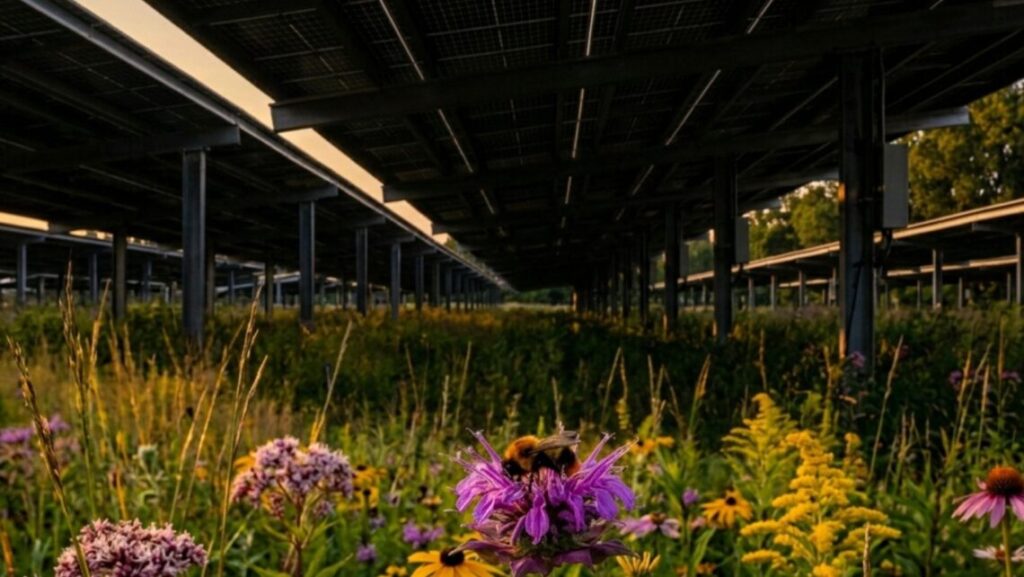
The conversation surrounding clean energy is a back-and-forth that seems never-ending. Most notably, there are many people who have a belief that building these power sources will do more harm than good to the environment around them.
Well, in Minnesota, researchers tracked two solar farms across five years in a study entitled “If you build it, will they come?”
From the start, the “utility-scale energy facilities” took a bit of a different approach to many such sites. Decades prior to their lives as energy facilities, they were used for row crop agriculture. The goal, then, became to ensure that these facilities had minimal impact to the surrounding soil. “Both sites remained adjacent to row crop agriculture on at least 2 sides throughout our study,” researches noted.
Using a combined land area of 31 hectares (about 77 acres), the Atwater and Eastwood Solar Sites are constructed of solar panels elevated 2 meters off the ground. After construction, the builders intentionally selected grasses and wildflowers indigenous to the area and planted them directly underneath and surrounding the panels.
For five years, researchers kept track of floral abundance, flowering plant species richness, insect diversity, total insect abundance, and native bee abundance. Within those five years, they observed that every season the amount of flora and fauna steadily increased. The observed insect life tripled over the life of the study. Most notably, the bee population saw a significant revitalization.
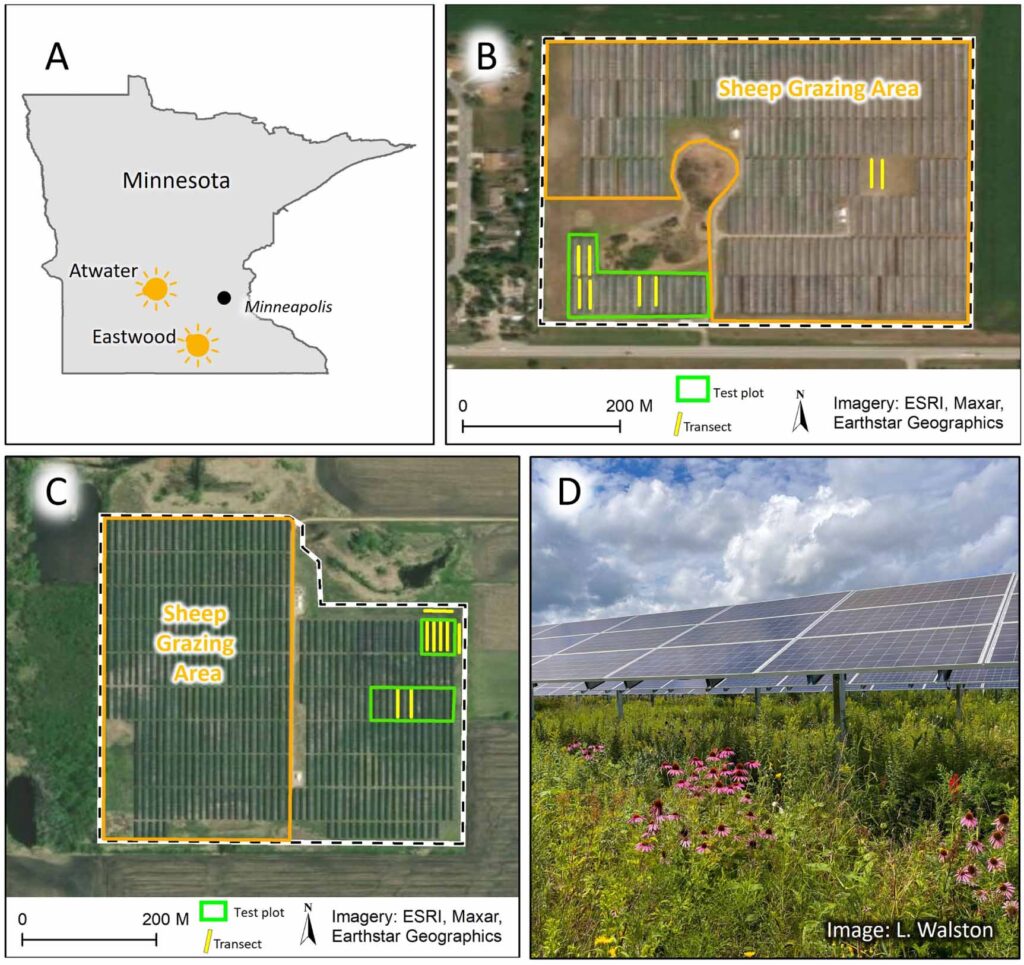
Leroy J. Walston, et al, 2024 Environ. Res. Lett.
This form of rewilding is an unprecedented way to ensure that clean energy lives up to its name and does more than provide alternatives. “Land planted with hardy native species needs far less mowing and maintenance,” wrote Carlos Albero Rojas in his reporting on the Minnesota solar farms. Particularly, the increase in the bee population in those areas shows promise for another alternative for bringing bees back from a close call with extinction.
Every day, there are people in this world who are using their creativity, intellect, and ingenuity to give nature the support it needs to thrive. These Minnesota solar farms highlight that environmental health doesn’t have to be all or nothing. There are multiple ways we can ensure that we’re not simply taking from, but are intentionally finding ways to live with the gift of the natural world.
Before you go…
Reset the Algorithm
Share one good story today.
For far too long, the internet has been fueled by outrage. We think it can run on something better. Join us, share a good story from The Bright Side, and help us reset the algorithm that determines what trends on the internet.

Leave a Reply
You must be logged in to post a comment.