

Students often step out of the steady stream of backpack-wearing classmates to enter a softly lit, blue-walled room at York International School in Thornton, Colo.
Marissa Garcia is inside, sporting curly black hair, gold hoop earrings, a nose ring, and a hoodie. Though she looks like one of the high school students passing by the door, she is 24 and one of the young mentors helping youth across Colorado.
She is part of the inaugural Youth Mental Health Corps, a national service initiative that places near-peer mental health navigators in middle and high schools to support students and develop the next generation of behavioral health professionals.
Colorado was one of four states to pilot the program in fall 2024, with 144 corps members deployed across the state.
The program has since expanded to 11 states, with another five set to begin this fall and an additional 11 in the planning stages for 2027.
Data collected after the first full year show that the effort is simultaneously improving student attendance and behavioral health while helping to grow the overstrained mental health field by making it easier for young adults like Garcia to access training and start their careers.
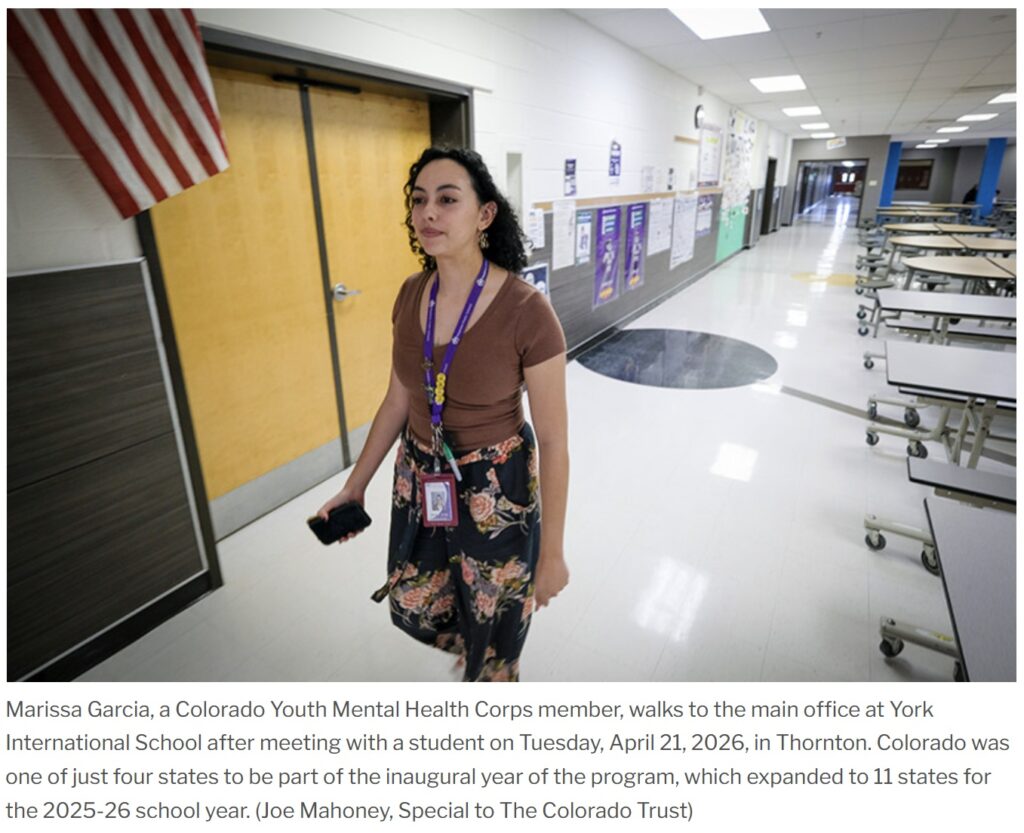
Garcia works full time at York International School as an engagement support member. She is not a licensed therapist or counselor, but she’s trained to identify mental health problems among students and provide connections and support. She regularly meets with a caseload of 27 high school students who struggle with attendance and school engagement.
She’s constantly receiving referrals from teachers or connecting with students who ask for a few minutes of her time. Garcia helps them access resources, such as clinical mental health support or reliable transportation to and from school, and she works with them on social-emotional skills and goal setting. Often, her role is simply to listen to what’s going on in the students’ lives.
Principal: Young mentors connect “in ways that I can’t”
“Marissa, because of her young age, can really connect with students in ways that I can’t as a 47-year-old,” said Ben Schneider, assistant principal at the school. “She has the ability to connect with them and develop relationships and be really in their corner in a really significant way.”
Youth mental health is considered a global crisis. Forty percent of high school students in the U.S. report feeling sad or hopeless, according to the Centers for Disease Control and Prevention, and suicide is the second-leading cause of death for people ages 10 to 34.
“I struggled with mental health in high school,” Garcia said. “I’m still young. I even think it’s scary talking to adults sometimes, so I get relying on someone who is more your age because they can relate more.”
Leah Ameca has benefited from that near-peer connection. Garcia initially met with the 17-year-old because of Ameca’s poor attendance and slipping grades as a freshman. Ameca has attended York International since kindergarten and is now entering her senior year.
Ameca struggles with depression and anxiety and said she found it hard to get to school on time for her 6 a.m. orchestra class because she was tired or just didn’t feel like it. She worked with Garcia — meeting at least weekly — on time management and on building healthy habits, such as eating more nutritious food and drinking water. Ameca said she used to self-harm but doesn’t anymore. She is now in therapy and taking medication.
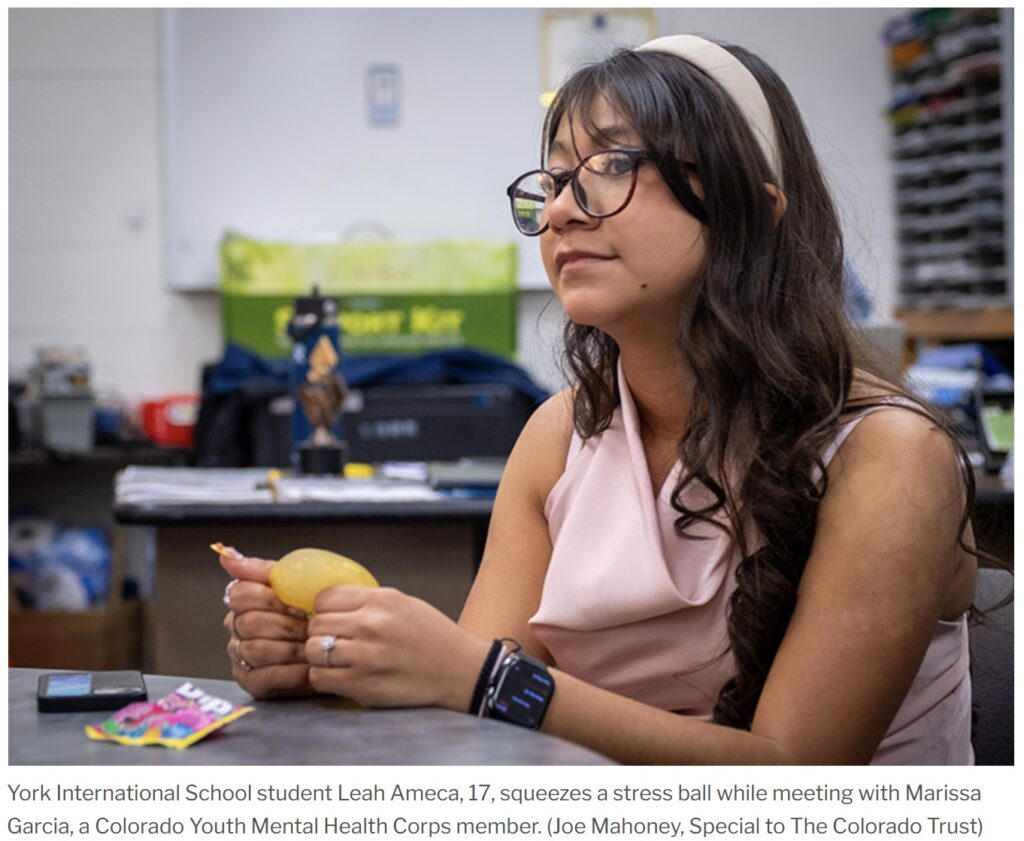
Garcia encouraged Ameca to ask for help and sat with her during the first semester of sophomore year when she told her parents about what was going on with her mental health. Garcia supported Ameca as she worked to find a therapist with whom she felt comfortable.
“At the time, I didn’t like talking about my feelings with my family. I didn’t like talking about my feelings with anyone,” Ameca said. “I liked being independent about that. But I’m very happy that I didn’t stay quiet, that one day [when I disclosed my cutting], because that one day changed my life. And if it wasn’t for that one day, I don’t think I would be here.”
Garcia can relate.
“I understand firsthand how it feels to not want to wake up the next morning,” Garcia said. “That’s something I really push for with the kids I work with—helping them understand that this is just one little piece of your life. High school is not how the rest of your life is going to look. There’s so much more out there.”
Colorado Lt. Gov. Dianne Primavera, whose office oversees the Colorado portion of the initiative, praised the program’s innovativeness.
“To have this model where it’s peer-to-peer or near-peer help, I think, is really, really powerful,” she said.
Freelance journalist Daliah Singer wrote a longer version of this story for Collective Colorado, a publication of The Colorado Trust. This version has been rewritten and condensed. It first appeared at collective.coloradotrust.org on July 29, 2026, and can be read in Spanish at collective.coloradotrust.org/es. The Colorado Trust is a philanthropic foundation that works on health equity issues.
Before you go…
Reset the Algorithm
Share one good story today.
For far too long, the internet has been fueled by outrage. We think it can run on something better. Join us, share a good story from The Bright Side, and help us reset the algorithm that determines what trends on the internet.
If you enjoyed this article, you should read about a mental health program making similar strides in South Dakota and an adventure therapy company that builds healthier lives through excursions and mental health support.
Leave a Reply
You must be logged in to post a comment.