
The Church That Refused to Disappear
May 22, 2026: Some buildings hold history. Others seem to hold on to history itself.
This summer, a small brick church tucked into the tiny town of Echo, Utah, is celebrating a milestone few structures ever reach: 150 years. Built in 1876, the historic Echo Church — the second-oldest standing building in Summit County and the oldest one open to the public — has survived changing communities, shifting purposes, neglect, and even the possibility of demolition.
And perhaps that’s what makes its story feel less like architecture and more like resilience.
Echo Church arrived during a transformative period in American history, shortly after the railroad reshaped the West. Handmade bricks formed its walls, and generations of people would eventually pass through its doors. But the church was never just a church. It also became a schoolhouse, serving local children at a time when formal education systems were still developing in the area. During the week, students filled the building. On Sundays, worshippers did.
Its purpose evolved because communities evolve.
Over the decades, ownership changed. The building served different congregations and witnessed the rise and fall of a once-thriving railroad town. Then came the difficult years.
By the late 1970s, Echo Church had fallen into serious disrepair. The roof had deteriorated. The structure sat empty. Demolition discussions began. After more than a century, it looked as though the little church had finally reached the end of its story.
But the people of Echo had other ideas.
Instead of letting history disappear, local residents came together and purchased the building themselves, forming the Echo Community Historical Organization. Volunteers restored, repaired, and preserved what earlier generations had built.
Even today, that work continues. Last summer volunteers repainted the exterior and inspected the church’s bell tower so the building could celebrate its sesquicentennial in style.
Visitors this season can explore exhibits about American history and the church’s own remarkable journey, including historic photos and stories of the people who built and sustained it.
But perhaps the most interesting lesson isn’t inside the exhibits.
We tend to assume the most important things in life are the biggest: major cities, giant institutions, headline-making events. Yet sometimes the most meaningful stories survive in small places — in overlooked towns, quiet corners, and old brick buildings that people decide are still worth saving.
Echo Church reminds us that preservation isn’t really about buildings.
It’s about refusing to let good things disappear simply because they’ve gotten old, weathered, or inconvenient.
People, communities, friendships, traditions — many of the best things in life require the same choice.
Sometimes what deserves saving just needs enough people willing to ring the bell one more time.
Sometimes what deserves saving just needs enough people willing to ring the bell one more time.
To Honor His Father, Generous Donor Gives Graduating Class a Head Start
May 19, 2026: The graduating class of North Carolina State University was gifted an incredible chance at a clean slate.
Anil Kochhar, cofounder and former vice chairman of healthcare technology company Outcomes Health Information Solutions, stepped on to the podium in front of the NCSU graduating class. With a tremor in his voice, he announced:
“It is my privilege to announce that today, in honor of my father, my wife, Marilyn, and I are providing a graduating gift to cover all the final-year educational loans incurred by the graduates during the 25/26 academic year.”

The audience of graduates, unsurprisingly, erupted in applause.
Anil’s father, Prakash Chand Kochhar, was a Punjabi immigrant with dreams of furthering his deep passion for textiles into a career. In 1946, newly arrived in Raleigh, NC, and with $600 to his name, he enrolled in NC State’s (then) School of Textiles. He earned both his bachelors and masters degrees, while working as a student employee.
The Kochhar patriarch went on to have an incredible career as a textile engineer, until his untimely passing in 1985. His final wish: “to provide for those invested in a meaningful future in textiles.” Thus NC State established The Prakash Chand Kochhar Memorial Textile Scholarship in 1986.
His son, Anil, continues the tradition of giving students a chance at fulfilling their dreams.
So many who have extended their education, particularly in the past decade or so, are often confronted with the prospect of starting their lives with a handicap. It’s so affirming to find people like the Kochhars who want to be a blessing to those in need.
Much of media would have us convinced that we’re all on our own. People like Prakash, Anil, and Marilyn Kochhar are a reminder that there are those who genuinely want the best for humanity.
Closer to the Stars Than Ever Before
May 13, 2026: With powerful advancements in astral technology, humans have become closer acquainted with the cosmos.
The Kitt Peak National Observatory, located in Arizona, has been the hub for new discoveries of our endless universe. Recently, the Dark Energy Spectroscopic Instrument (or DESI) has officially come to the end of its five-year mission to build the largest 3D map of the universe. Indeed, this is the most ambitious, broadest examination of the universe man has ever conceived. The imagery coming from this powerful telescope are astounding.

The team discovered that the dark matter that was once thought to be constant (meaning it shouldn’t shift in strength) is actually weakening. What does this mean? “This could be the most interesting discovery in cosmology since that of dark energy itself,” proclaims Nathalie Palanque-Delabrouille, DESI collaborator and scientist at Berkeley Lab.
“DESI has exceeded expectations,” says Klaus Honscheid, lead scientist of DESI instrument operations. “Everyone on the operations team worked incredibly hard to keep the survey progressing with high efficiency. And I think rightly so, we are all very proud that we actually achieved this goal.”


The team has every right to be incredibly proud of the work. According to Palanque-Delabrouille, more than 900 scientists, nearly a third of whom are graduate students, worked across 14 countries and 75 institutions. With that kind of team dynamic, it was a major feat to complete their plan on schedule and on budget.
When put to the test, human ingenuity can be unstoppable. Our universe remains an enigma, but the efforts to reach its edges continues to bring us closer to the stars.
Mother Nature Is Healing
May 8, 2026: Two stories coming from around the world show how communities can come together to truly create healing.
First, from Sussex, England. We may have all heard about “fracking,” an invasive and highly destructive practice of extracting oil. Fewer of us may be familiar with bottom trawling. The extreme nature of the practice has devastated marine life along the Sussex Coast, including more than 95% of Sussex’s kelp forests.
Well, March 16 marked the five-year anniversary of Sussex’s Inshore Fisheries and Conservation Authority (IFCA) ban on bottom trawling. As a result of the ban (known as the Nearshore Trawling Byelaw) and the efforts of the Sussex Kelp Recovery Project (SKRP), fish nurseries are seeing a resurgence. Black Sea Bream and mussel beds are slowly starting to revive, with new populations stretching more than a kilometer (a little more than half a mile) along the coast.
“I’ve seen mussel beds covering huge areas, and it’s these structures that young kelp spores will attach onto,” Dr. Ray Ward, Reader in Marine Sciences at Queen Mary University of London, said, emphasizing that “these first shifts matter.”
On to initiatives in North and East Africa, specifically in Kenya. Many of us grew up hearing about the seemingly endless disappearance of the coral reef ecosystem, which supports nearly 25% of all marine life on the planet. A partnership between digital photography giant Canon Central and North Africa and Kenya’s Oceans Alive Foundation has resulted in revolutionary imaging technology to help educate people about and heal the destruction of the reef.

Canon’s World Unseen 2.0 initiative was a catalyst in reef restoration efforts in the Seychelles. This new Oceans Alive chapter in Kenya extends as far as the North Coast and the community of Kuruwitu. The results have been extremely promising. With Canon’s digital technology, scientists will be able to collect data about coral size, survival rates, and ecosystem recovery over time.
“The World Unseen in Kenya reflects our commitment to practical, science-based conservation that empowers communities,” said Somesh Adukia, Managing Director of Canon Central and North Africa. “Paired with Oceans Alive’s local leadership, Canon’s imaging expertise will enable precise monitoring, credible storytelling, and stronger reef recovery efforts.”
In a time where it seems so many people are divided, it’s important to remember that it’s community that truly changes the world. The efforts in Sussex and East Africa prove that with a common goal we can come together to fulfill the dream of a better planet for future generations.
Mental health program succeeding in Sioux Falls
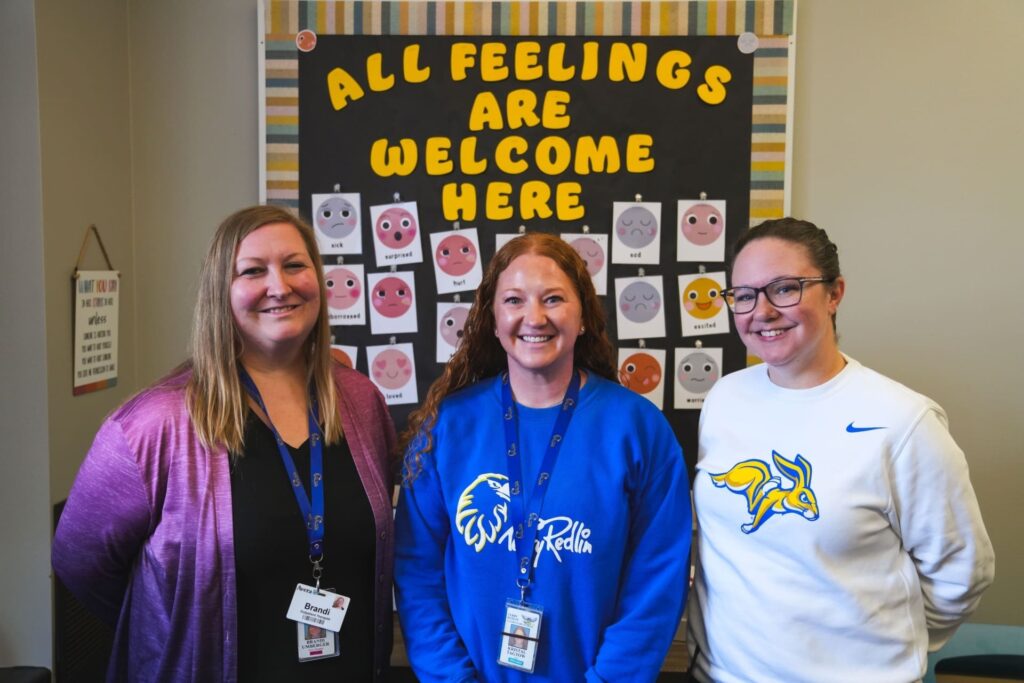
May 4, 2026: When Sioux Falls schools launched a pilot program placing mental health therapists directly inside five schools, the goal was simple: make help easier to reach before students hit a crisis point.
Just a few months later, the results are already hard to ignore.
School officials announced this week that attendance among participating students has increased by 14 percent since the program began in late 2025. Even more striking, “life threats” — situations involving serious mental health crises — have dropped by 51 percent in the participating schools.
The program is a partnership between the Sioux Falls School District, Avera Health, the Seed for Success Foundation, and the Sioux Falls Area Community Foundation.
Instead of asking struggling students to navigate long waits, transportation challenges, or the stigma that can come with seeking help, the program brings mental health support into the place students already spend most of their day: school.
And that may be the biggest lesson in all of this. Sometimes life-changing support doesn’t begin with a breakthrough moment. Sometimes it begins with making it easier for someone to walk down the hallway, open a door, and realize they don’t have to carry everything alone.
The secret to aging well might be your mindset
April 24, 2026: In a sunny room at Atlanta’s C.A. Scott Recreation Center, a group of women in their 60s, 70s, and 80s pull their chairs closer together, laughing as soft music hums in the background.
They’re not there to sit still.
They’re there to move—stretching into yoga poses, practicing balance, and staying active through a free city program designed for seniors. On other days, it’s line dancing, computer classes, or even swim lessons. The goal isn’t just activity—it’s vitality.
And it’s working.
The women say the classes keep them sharp, connected, and energized. But there’s something deeper at play, too.
A recent study published in Geriatrics, which followed more than 11,000 older adults over a decade, found that nearly half improved their memory or walking speed over time. The common thread?
A positive attitude about aging.
It turns out that how we think about getting older may shape how well we actually do it.
In that Atlanta recreation center, it’s easy to see what that looks like—community, movement, laughter, and a shared sense that life still has plenty left to give.
Because aging well isn’t just about adding years. It’s about believing those years are a great part of life.

Kindness is good for you, according to science!
April 21, 2026: Turns out, kindness doesn’t just feel good—it’s good for you.
Researchers at the Harvard T.H. Chan School of Public Health have found that people who regularly volunteer or go out of their way to help others aren’t just boosting their mood—they’re supporting their physical health, too.
We’re talking less pain, better overall health, and even a longer life.
In another study led by Tyler VanderWeele, people who made kindness a regular part of their lives were also more likely to stay healthier and more active as they got older.
It’s a simple idea, but a powerful one:
When you care for others, you’re also caring for yourself.
Before you go…
Reset the Algorithm
Share one good story today.
For far too long, the internet has been fueled by outrage. We think it can run on something better. Join us, share a good story from The Bright Side, and help us reset the algorithm that determines what trends on the internet.